Launch offer — valid today only

📄 Digital book in PDF · read it on your phone or print it

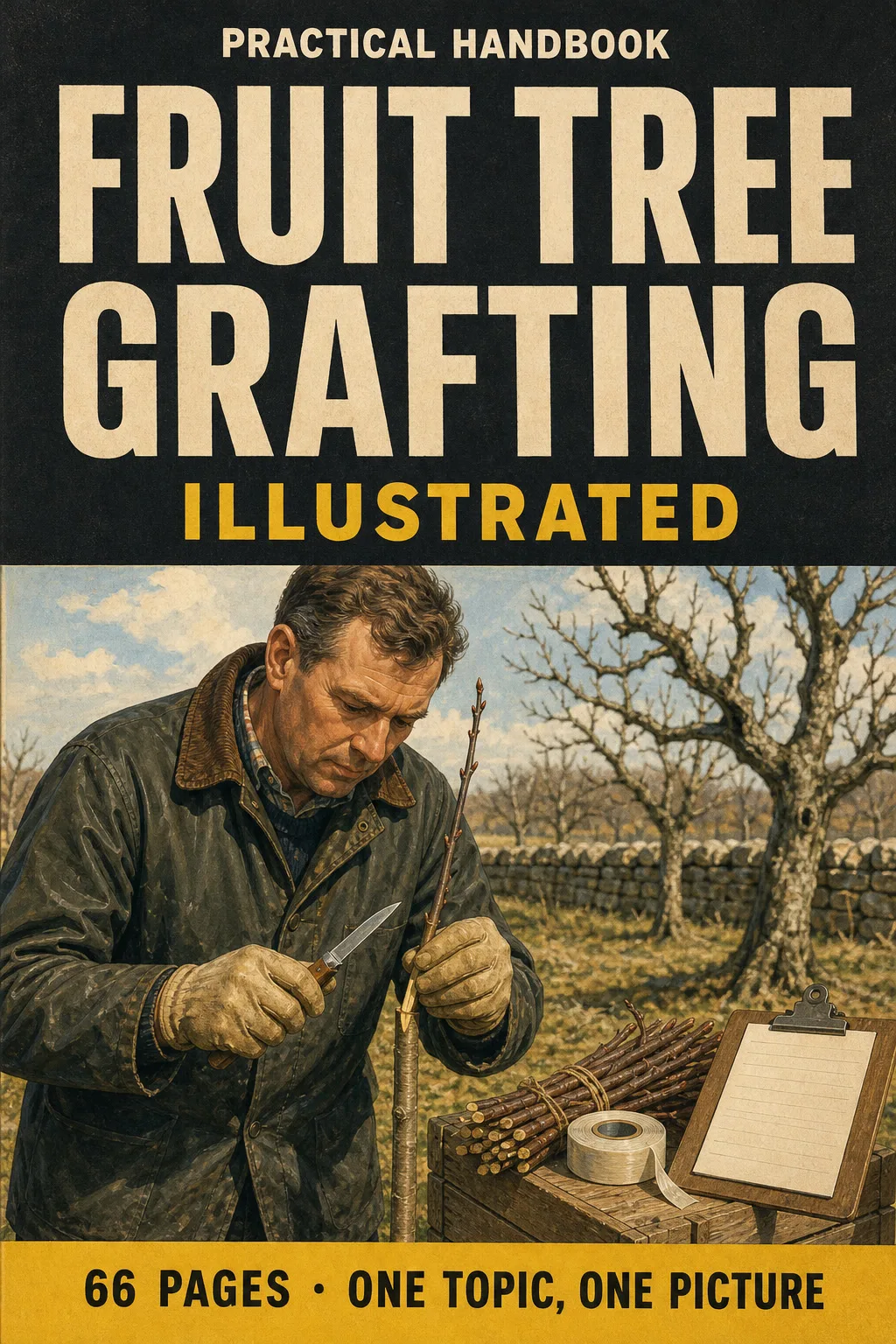
Fruit Tree Grafting for UK Gardens in Drawings Every Cut Drawn, Always in Order

Rootstocks side by side, scion wood, the UK grafting calendar, whip-and-tongue, cleft and bark grafts, chip budding, tying, aftercare and family trees. Each topic has its own page: the drawing first, then what you need to remember. 66 illustrated pages.

YES, I WANT THE ILLUSTRATED GRAFTING BOOK

🔒 Secure checkout · PDF by email · 30-day guarantee

Every topic, its own pageEach graft drawn cut by cut, with the explanation alongside
66 illustrated pages66 illustrated pages in 8 parts: 62 topics, each on its own page
Up-to-date sourcesRHS grafting advice, East Malling rootstock classes and GOV.UK plant health rules
PDF by emailFormat

Look Inside the Book

Every page has one large drawing and a box with the cuts, measurements and timings you need to know:

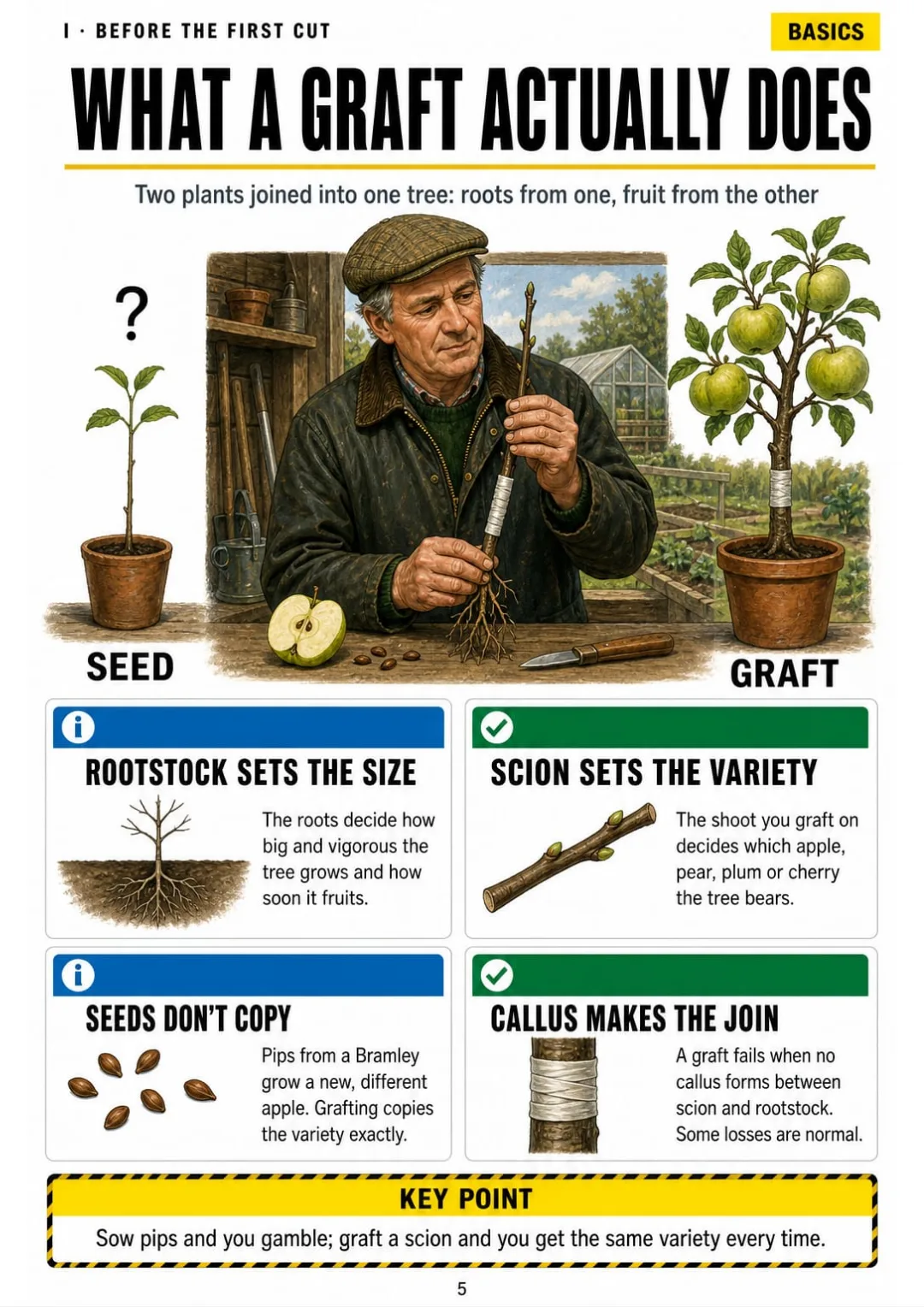
Rootstock sets size, scion sets variety: that's every graft in one line.
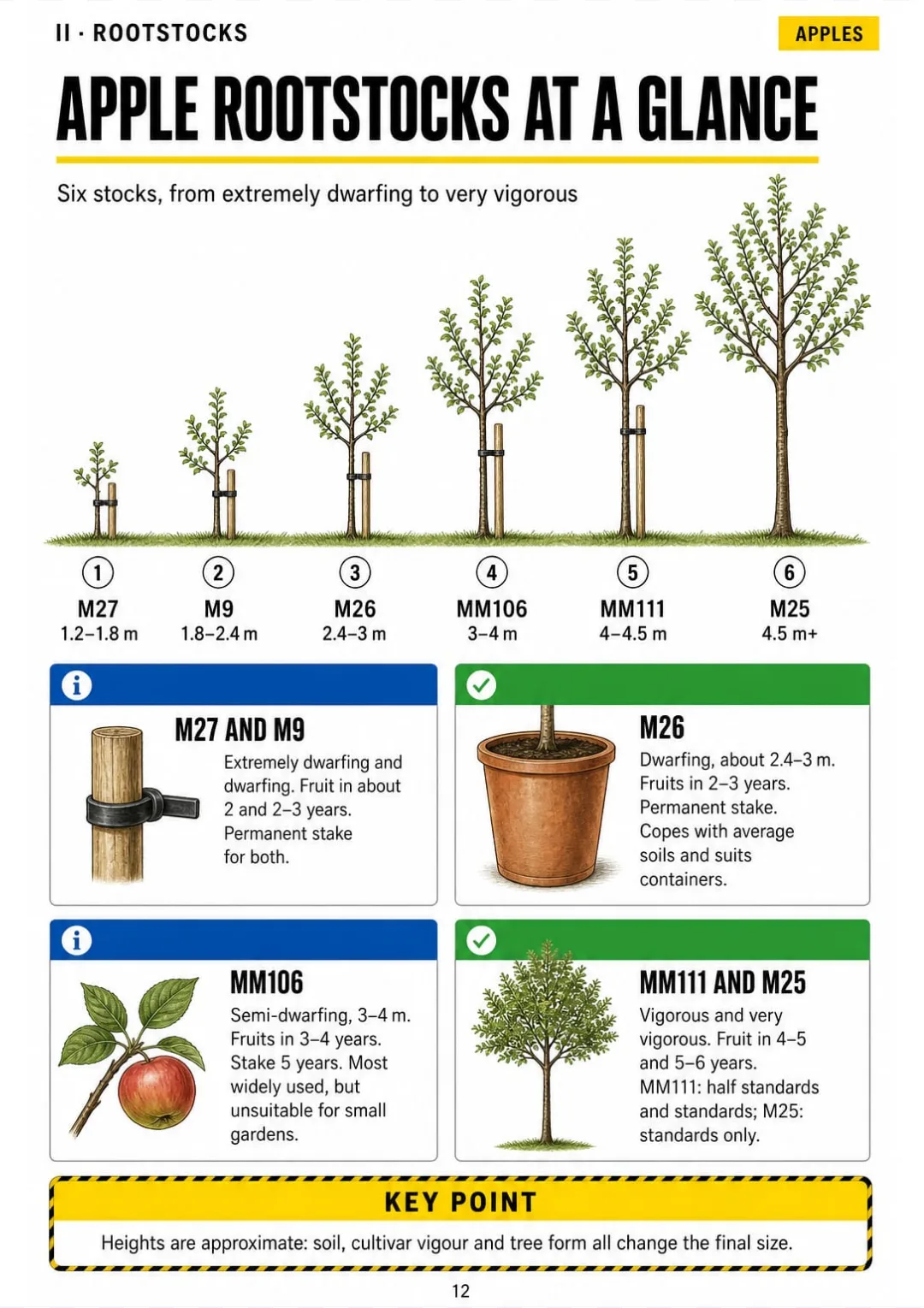
M27 to M25: approximate heights, years to fruit and staking for each apple rootstock.
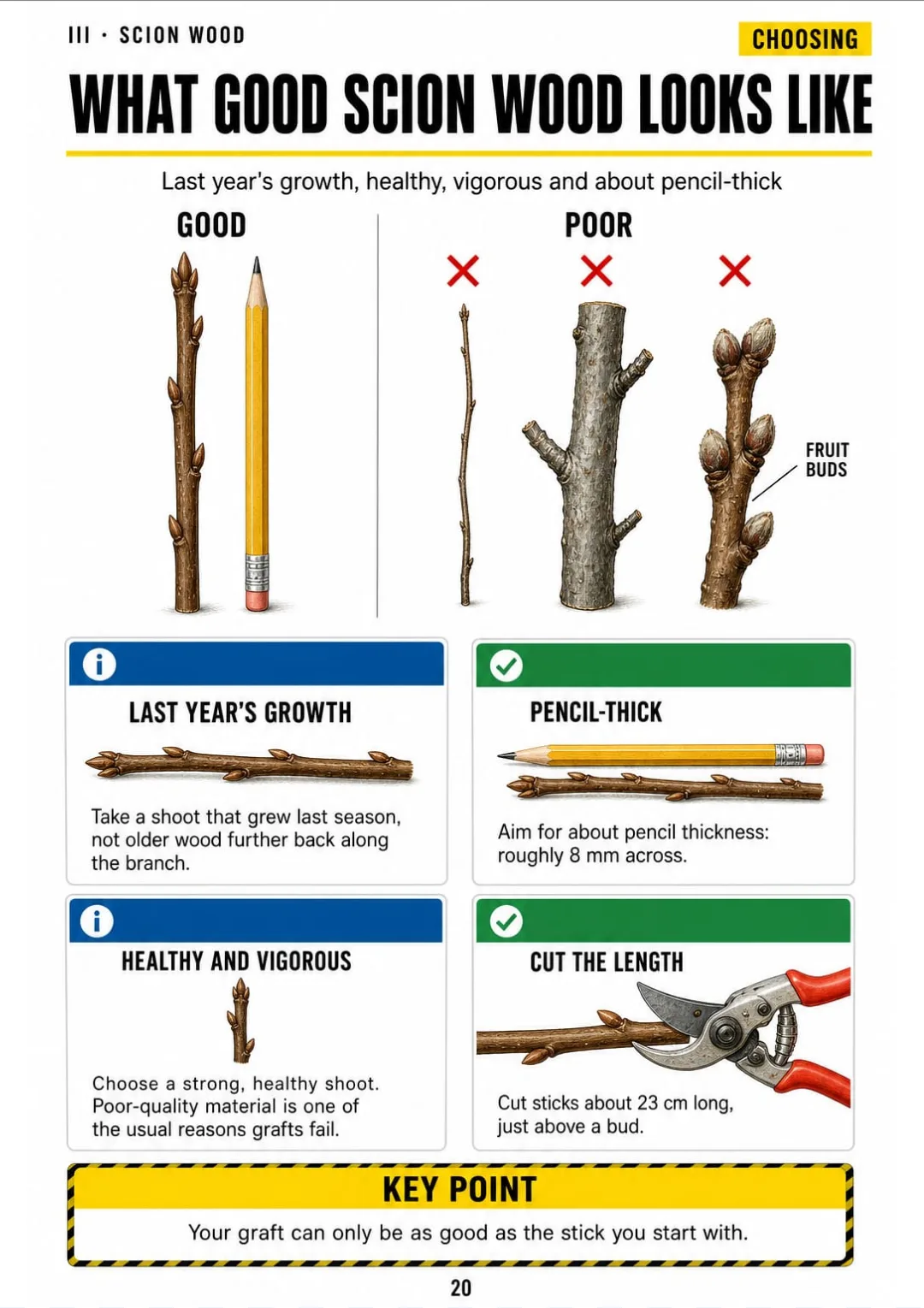
Scion wood: previous year's growth, about 8 mm thick, cut in 23 cm lengths
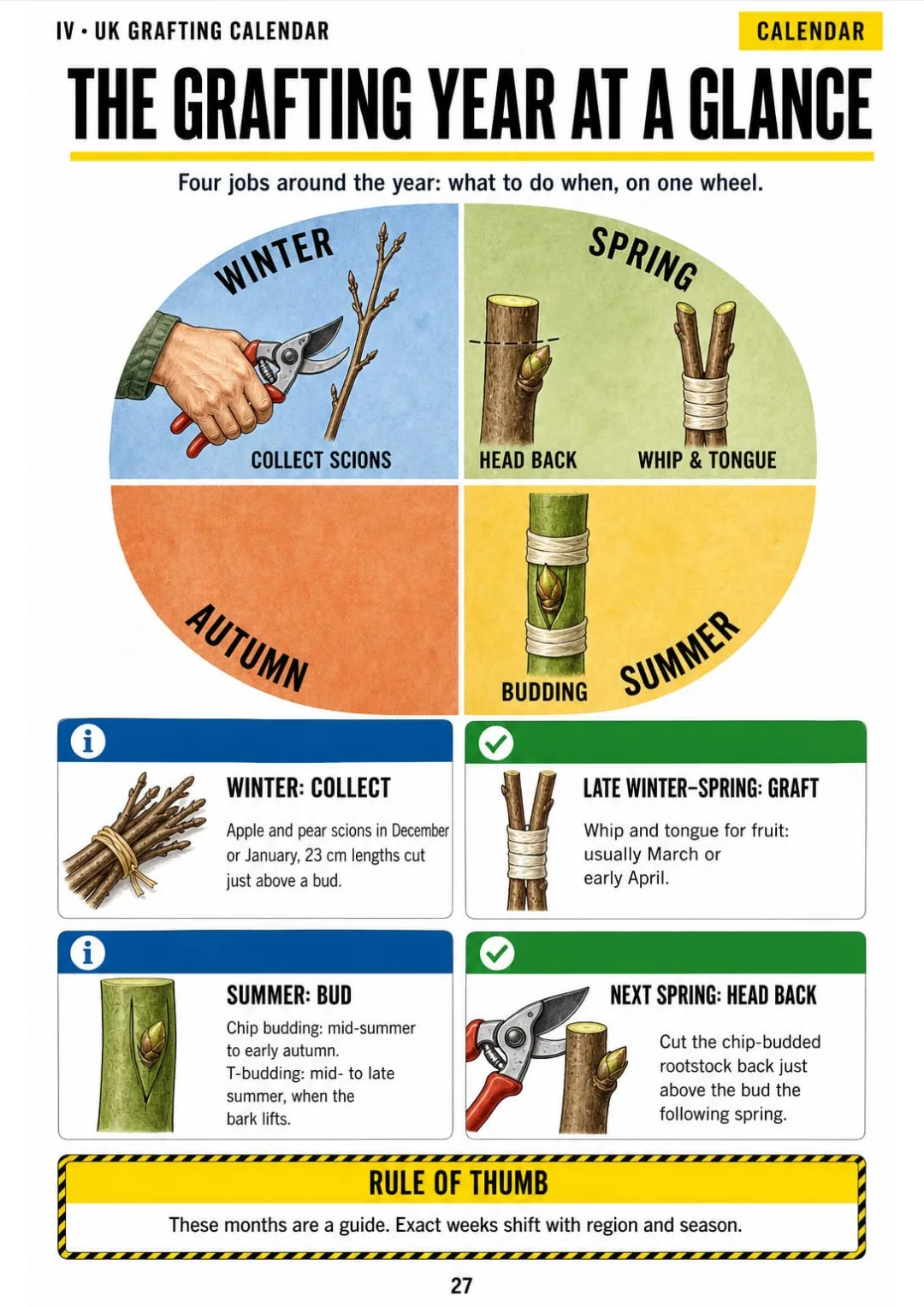
Whip and tongue in March–early April, chip budding mid-summer to early autumn
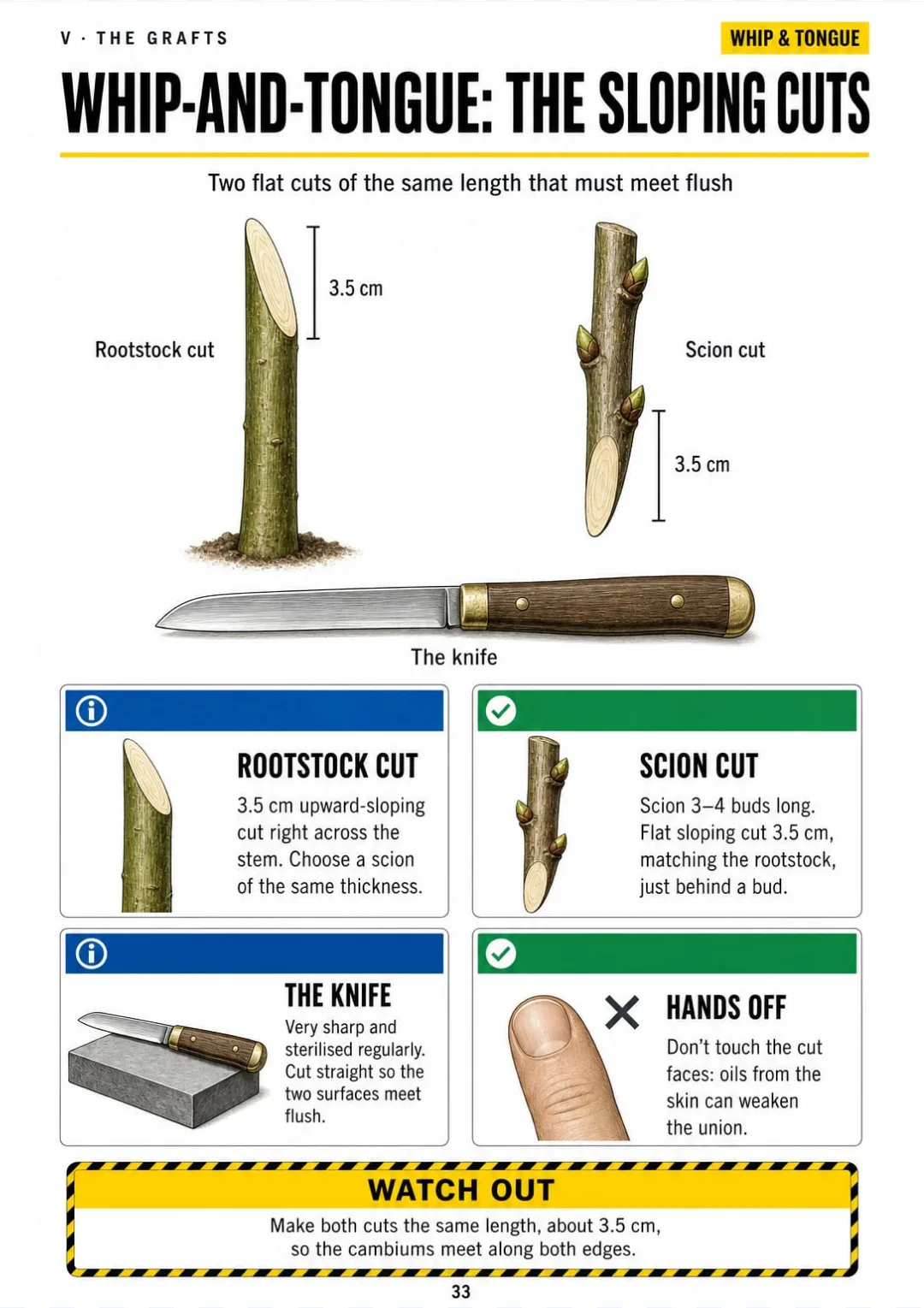
Rootstock and scion both 3.5 cm: two matching flat sloping cuts, no hollows
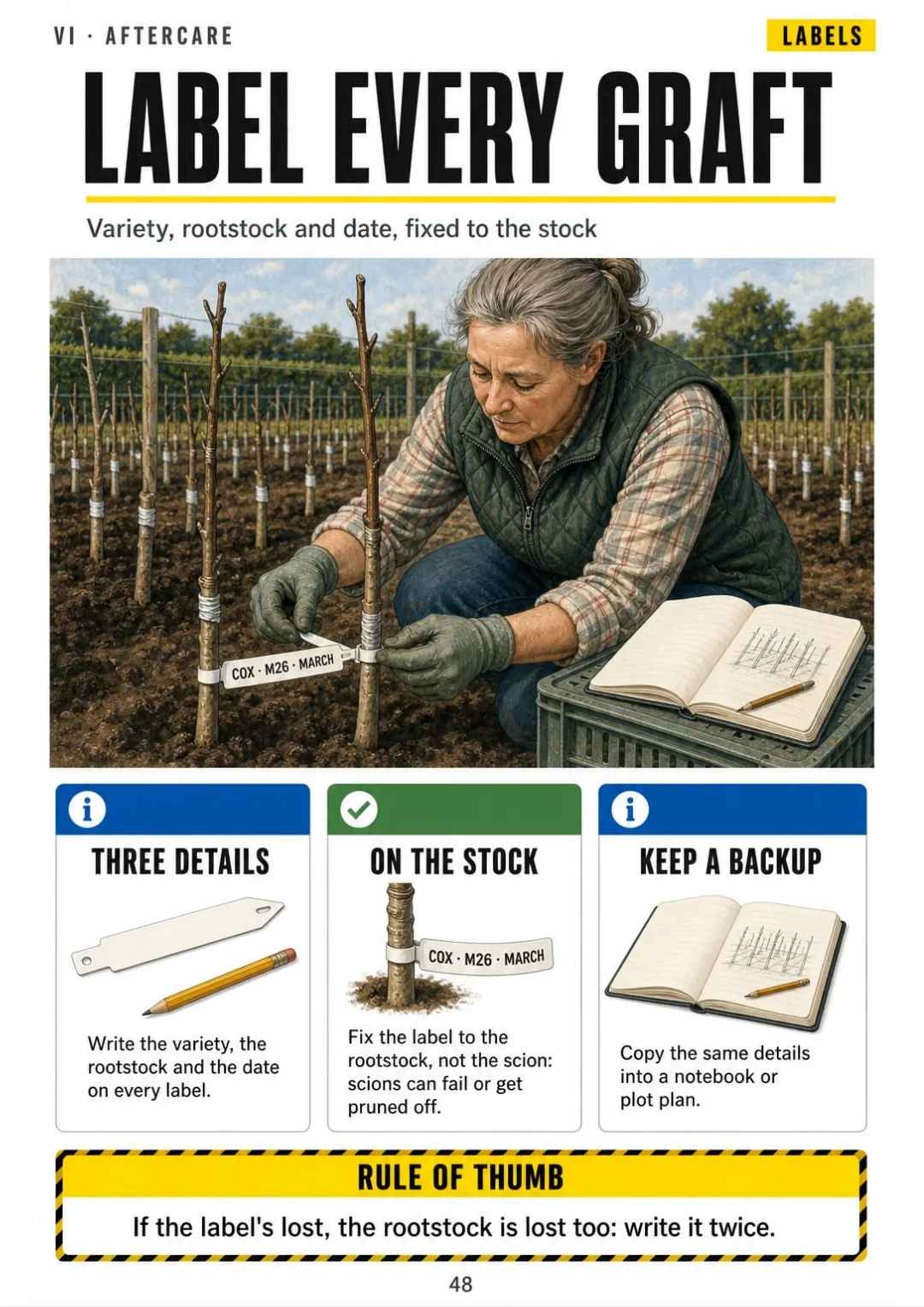
Variety, rootstock and date: on the stock and in the notebook
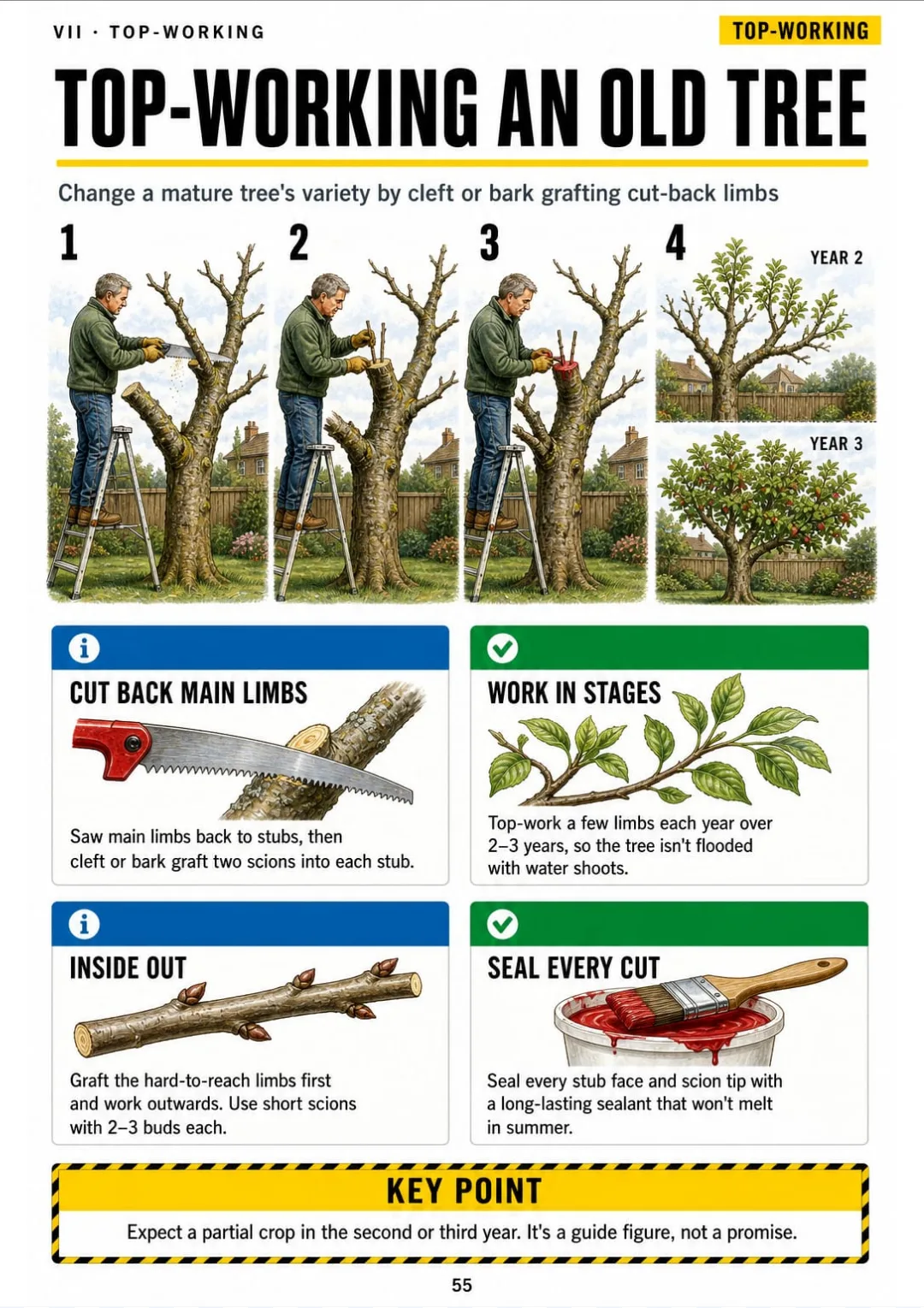
Top-working: cut back main limbs over 2–3 years, cleft or bark graft each stub.
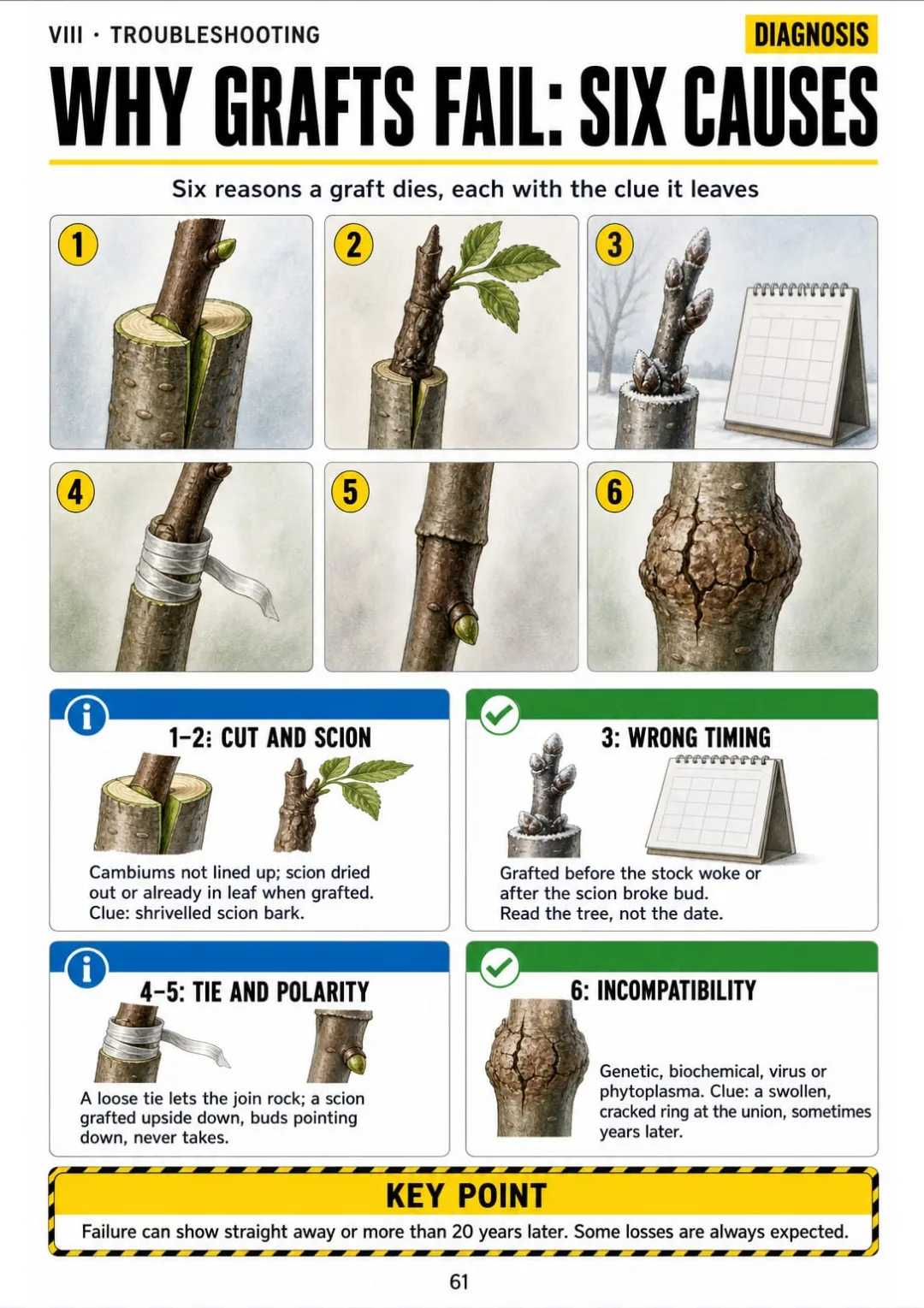
Six causes of graft failure, from poor alignment to incompatibility, in six drawn panels

Swipe to see more →

These are real pages from the book. The table of contents is the full one: 8 parts and 62 topics.

The Problem Isn't You. It's How It Was Explained to You.

It's January. You're standing under the old apple at the end of the plot with secateurs in your hand, and you have to decide which shoots to cut for scion wood.

Your fruit book says 'vigorous, well-ripened one-year wood' halfway down a long paragraph. It never shows you what that looks like on the branch. So you guess, and you only find out in spring.

Scion wood: previous year's growth, about 8 mm thick, cut in 23 cm lengths

Here, scion wood has its own page: last year's growth drawn next to older wood, about 8 mm thick, cut in 23 cm lengths, with the plump buds marked and the soft tip crossed out.

The rest works the same way: the cambium line, the sloping cuts of whip-and-tongue, the chip bud, the tie and when the tape comes off. Each one has its own page.

You look at the page once, go to the tree and cut the right wood. No going back to the book, no pausing a video with cold hands.

COMPARE FOR YOURSELF

The Same Topic, Two Ways to Learn It

THIS
  • The usual book: line after line
  • Rootstocks explained only in words
  • You get to the plot still unsure
The selection of an appropriate apple rootstock depends upon the vigour classification assigned to it, which in turn governs the eventual dimensions of the tree, the interval before cropping commences and the requirement for permanent support. Very dwarfing types such as M27 produce trees of approximately 1.2 to 1.8 m, while M9 and M26 are regarded as dwarfing and semi-dwarfing respectively; MM106 is generally considered semi-vigorous, and MM111 and M25 vigorous, the latter being suited to standard trees requiring considerable space and deeper soils.
FOR THIS
  • Every apple rootstock in one drawing
  • Heights, years to fruit and staking in a box
  • You see it and you get it
M27 to M25: approximate heights, years to fruit and staking for each apple rootstock.
CONTENTS

Take a Look at the 8 Parts and 62 Topics

Before the first cut, rootstocks, scion wood, the UK grafting calendar, the grafts cut by cut, tying and aftercare, top-working and family trees, and troubleshooting: 66 pages, all illustrated.

IBefore the First Cut · pp. 5-11
  1. What a Graft Actually Does
  2. The Cambium: the Thin Green Line That Decides Everything
  3. Rootstock, Scion and Interstem
  4. Right Way Up: Scion Polarity
  5. What Grafts onto What
  6. The Grafting Kit
  7. Sharpening and Cutting Safely
IIRootstocks Side by Side · pp. 12-19
  1. Apple Rootstocks at a Glance
  2. Choosing an Apple Rootstock for Your Plot
  3. Pear Rootstocks: Quince C, Quince A and Pyrodwarf
  4. Pears That Need an Interstem
  5. Plum and Gage Rootstocks
  6. Cherry Rootstocks
  7. Buying and Planting Rootstocks
  8. Is the Rootstock Ready to Graft?
IIIScion Wood · pp. 20-26
  1. What Good Scion Wood Looks Like
  2. When to Collect: Midwinter, Fully Dormant
  3. Saving the Old Family Tree
  4. Storing Scions Until Spring
  5. Is My Scion Still Alive?
  6. Budwood for Summer Budding
  7. Swapping and Importing Scion Wood
IVThe UK Grafting Calendar · pp. 27-32
  1. The Grafting Year at a Glance
  2. Spring Grafting: Stock Waking, Scion Asleep
  3. Bark Grafting: Wait Until the Bark Slips
  4. Summer Budding: July to August
  5. Plums and Cherries Play by Different Rules
  6. Read the Tree, Not the Date
VThe Grafts, Cut by Cut · pp. 33-45
  1. Whip-and-Tongue 1: The Sloping Cuts
  2. Whip-and-Tongue 2: The Tongue
  3. Whip-and-Tongue 3: Joining When Sizes Differ
  4. Splice Graft: the Simplest Join
  5. Cleft Graft 1: Splitting the Stock
  6. Cleft Graft 2: Cutting the Wedge Scions
  7. Cleft Graft 3: Two Scions and Sealing
  8. Bark (Rind) Graft 1: Preparing the Stock
  9. Bark (Rind) Graft 2: Slipping the Scion In
  10. Chip Budding 1: Taking the Chip
  11. Chip Budding 2: Fitting It to the Stock
  12. T-Budding
  13. Bench Grafting Indoors
VITying, Sealing and Aftercare · pp. 46-54
  1. Tying: Tight, Overlapping, Bottom to Top
  2. Sealing Against Drying Out
  3. Label Every Graft
  4. The First Weeks: Signs It Has Taken
  5. When to Remove the Tape
  6. Heading Back and Removing Suckers
  7. Training the First Shoot
  8. Protecting Young Grafts
  9. Planting Out the Maiden Tree
VIITop-Working and Family Trees · pp. 55-60
  1. Top-Working an Established Tree
  2. Keep a Nurse Branch
  3. Planning a Family Tree
  4. Pollination Groups for Family Trees
  5. Keeping a Family Tree Balanced
  6. Bridge Grafting a Damaged Trunk
VIIITroubleshooting and Review · pp. 61-66
  1. Why Grafts Fail: Six Causes
  2. Reading a Graft That Didn't Take
  3. The Most Frequent Slips
  4. Grafting Day Checklist
  5. Every Graft on One Page
  6. Grafting Words at a Glance

One Page, One Topic, All Clear

Think of it this way:

It's a dry morning in March. The buds on your rootstocks are just breaking and the scion wood has been in the fridge since January. Today you join them.

You open the whip-and-tongue page and see the two sloping cuts drawn side by side: both 3.5 cm long, flat, with no hollows, and the cambium lined up on one side.

Rootstock and scion both 3.5 cm: two matching flat sloping cuts, no hollows

Chip budding in summer, tying bottom to top, the first weeks of aftercare, top-working an old tree and planning a family tree work the same way: each one has its own page.

Fruit Tree Grafting Illustrated is 8 parts and 62 topics, all drawn, and it ends with the six causes of failure, a grafting day checklist and every graft on one page.

What you see drawn, you don't have to memorize.

What's Inside Fruit Tree Grafting Illustrated:

Ipp. 5-11

Before the First Cut

What a graft does, the cambium, rootstock, scion and interstem, polarity, what grafts onto what, the kit and safe cutting.

IIpp. 12-19

Rootstocks Side by Side

Choose the right size of tree for your plot: apple rootstocks side by side, pear rootstocks and interstems, plum, gage and cherry rootstocks, and how to check stocks before you buy.

IIIpp. 20-26

Scion Wood

Good scion wood, when to collect it, saving an old family tree, storing scions, checking they're alive, budwood, and swapping or importing wood.

IVpp. 27-32

The UK Grafting Calendar

The grafting year at a glance, spring grafting, bark grafting, summer budding, plums and cherries, and reading the tree rather than the date.

Vpp. 33-45

The Grafts, Cut by Cut

Whip-and-tongue, splice, cleft and bark grafts, chip budding, T-budding and bench grafting indoors, each one cut by cut.

VIpp. 46-54

Tying, Sealing and Aftercare

Tying, sealing, labelling, the first signs a graft has taken, removing the tape, suckers, training the first shoot, protection and planting out.

VIIpp. 55-60

Top-Working and Family Trees

Top-working an established tree, the nurse branch, planning and balancing a family tree, pollination groups and bridge grafting.

VIIIpp. 61-66

Troubleshooting and Review

Find out why a graft failed and avoid it next year: six causes of failure, reading a graft that didn't take, the most frequent slips, a grafting day checklist, every graft on one page and a glossary.

At the end of the book: Six causes of failure, a grafting day checklist and every graft on one page.
Plus: 2 Free Books

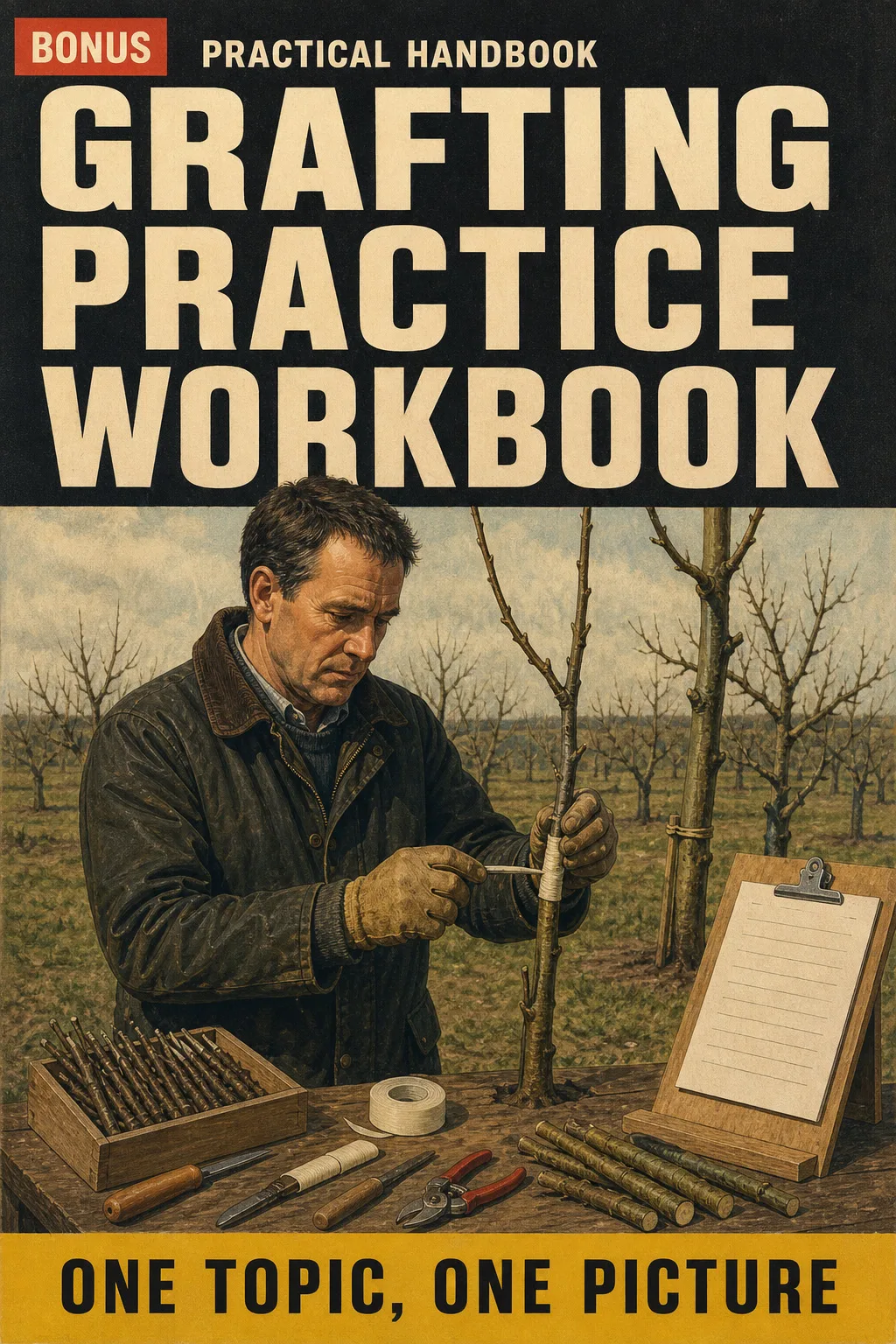
Grafting Practice Workbook

BONUS 1: «Grafting Practice Workbook»

Value on its own: US$ 17.90

Practise every cut on prunings before you touch a good tree: drills cut by cut, with self-check questions on timing, rootstocks and aftercare.

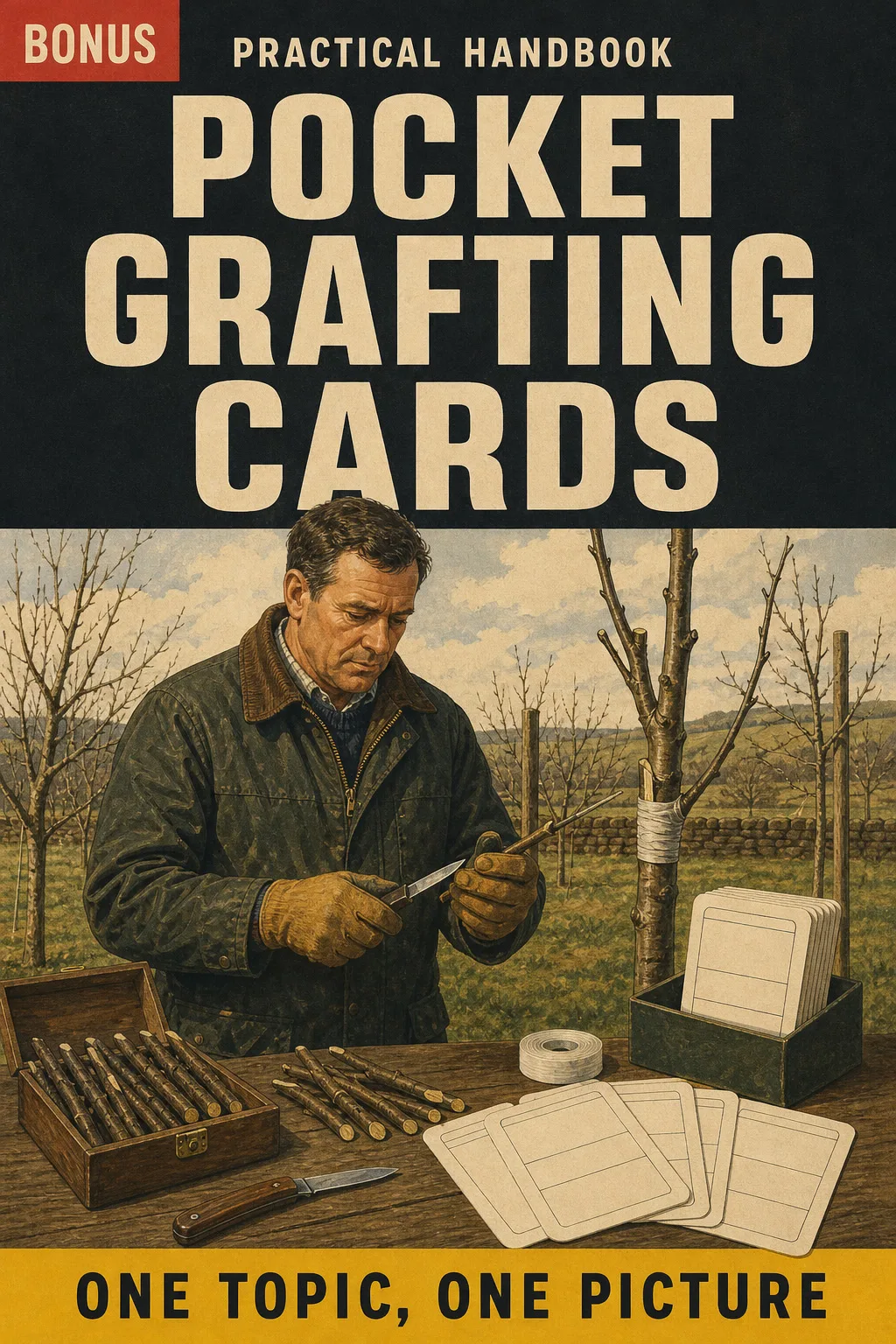
Pocket Grafting Cards

BONUS 2: «Pocket Grafting Cards»

Value on its own: US$ 14.90

One printable card per graft, with the cuts in order and the usual slips to watch for, so you can keep it in your pocket at the plot.

Fruit Tree Grafting Illustrated with 2 Free Books

  • Fruit Tree Grafting Illustrated: 66 illustrated pagesUS$ 63
  • BONUS 1: Grafting Practice WorkbookUS$ 17.90
  • BONUS 2: Pocket Grafting CardsUS$ 14.90
  • High-resolution PDF to printIncluded
Total value US$ 95.80
YOUR PRICE:
US$ 27
You save US$ 68.80
YES, I WANT FRUIT TREE GRAFTING ILLUSTRATED FOR US$ 27

📄 This is a digital PDF book sent to your email: nothing is printed or shipped.

Secure purchaseEncrypted payment30-day guarantee

PDF by email: We email you Fruit Tree Grafting Illustrated as a PDF, together with the two free books. It's a single payment: no installments, no extra charges.

Who This Book Is For

You're learning to graft

You're learning to graft

Every cut is drawn in order, so you can practise on prunings with the page beside you before you touch a good tree.

Grafting season is close

Grafting season is close

Scion wood in midwinter, grafts in March and April: the calendar page and the grafting day checklist show what to do and when.

You already graft

You already graft

You work out why some grafts failed, try chip budding or a cleft graft, and plan a family tree with the pollination groups on one page.

Everything You Get Today

US$ 95.80US$ 27
YES, I WANT FRUIT TREE GRAFTING ILLUSTRATED FOR US$ 27

📄 This is a digital PDF book sent to your email: nothing is printed or shipped.

30DAYS
GUARANTEE

30-Day Guarantee

Try Fruit Tree Grafting Illustrated for 30 days, bonus books included.

We refund everything if the file won't open, if the book isn't what you see here, if you were charged twice or if the email doesn't arrive. Just email us.

You pay once. No subscriptions.

Frequently Asked Questions

Is it for me if I prune my own fruit trees but have never grafted?

Yes. It starts with what a graft does and the cambium, then sets out each graft cut by cut. If you already graft, the calendar, aftercare and troubleshooting pages are for you too.

Where does the content come from?

It isn't an American book adapted for the UK. It's written for UK gardeners, in metric units, with the East Malling apple rootstocks UK nurseries sell, and checked against RHS advice on grafting and rootstocks and GOV.UK plant health rules on scion wood. The calendar follows UK seasons; exact dates vary with your region and the year.

Is this official material?

No. It's an independent illustrated book. The organisations are named only to show where the content was checked.

Does it replace a grafting course or hands-on training?

No. It helps you understand and repeat each cut, but it doesn't replace a course, a demonstration or advice from an experienced grafter.

How is this different from a fruit book or a video?

Most fruit books give grafting a few paragraphs and one photo, and every video cuts a different way. Here each graft has its own page, drawn cut by cut with the lengths and timings in a box, always in the same order. And there are pages for the part videos skip: why a graft failed and what to change next time.

When and how do I get it?

As a PDF by email, at the address you enter when you pay, together with the 2 free books.

Do I have to pay every month?

No. It's a one-off payment.

Can I have it on paper?

Yes. It's a printable PDF: print the pages you need and take them to the plot.

How does the refund work?

You have 30 days. We refund everything if the file won't open, if the book isn't what you see on this page, if you were charged twice or if the email doesn't arrive: just email us.

Before You Close This Page

No more rereading pages that don't stick.

No more guessing the whip-and-tongue cuts: they're drawn.

You get to the plot knowing where everything is.

Drawings make studying faster.

The book is right below.

One-time payment: US$ 27 · Guarantee: 30 days · PDF by email

YES, I WANT FRUIT TREE GRAFTING ILLUSTRATED FOR US$ 27

📄 This is a digital PDF book sent to your email: nothing is printed or shipped.